
Winter Bird Migrations Safari (Bosque del Apache, NM & Aransas, TX)
Why this “Next Stop” belongs on your winter loop
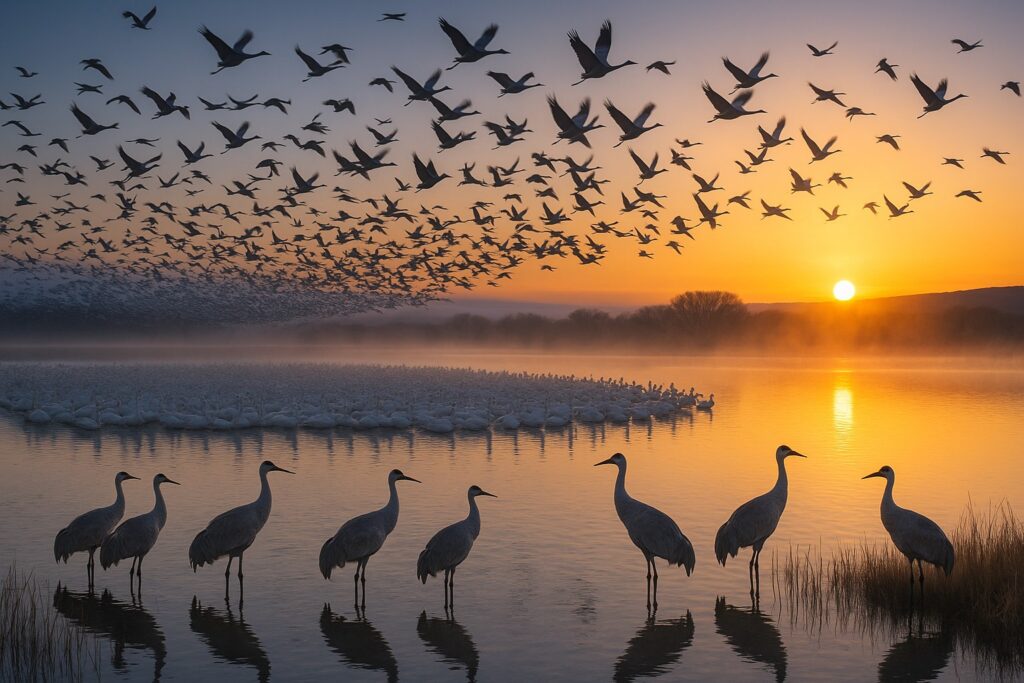
 If you’ve ever wanted nature to shake the ground before your first cup of coffee, put Bosque del Apache National Wildlife Refuge in New Mexico and Aransas National Wildlife Refuge on the Texas coast on your winter route. From late November through January, Bosque del Apache stages shoulder-to-shoulder dawn “liftoffs” of snow geese and sandhill cranes—tens of thousands of birds rise in waves as the sun burns through river fog. The refuge even describes the nightly roost-and-dawn exodus pattern, with geese blasting off near sunrise and cranes lifting in smaller groups afterward.
Down on the Gulf Coast, Aransas hosts the world’s only natural, self-sustaining wild flock of whooping cranes, which winter on and around the refuge. The 2024–25 season set a modern record—~557 whoopers counted—so your odds of a respectful, distant sighting are better than ever. Peak viewing typically runs late November through March. (Axios)
Best time to go
- Bosque del Apache (NM): Mid-November to late January for mass geese and crane action; sunrise and sunset are prime. The refuge recommends checking sunrise times and current roost/feeding locations at the visitor center. (U.S. Fish and Wildlife Service)
- Aransas (TX): November–March for whooping cranes, with many visitors favoring mid-winter for reliable sightings (ethical distance required—more on that below). (Texas Parks and Wildlife)
If your schedule is flexible, early December often aligns with Bosque’s Festival of the Cranes (2025 dates: Dec 3–7), a celebratory week of guided trips and bird talks. (U.S. Fish and Wildlife Service)
RV-friendly basecamps (easy in/easy out)
You can base right outside each refuge and keep pre-dawn drives short.
- Bosque del Apache area (San Antonio/Socorro, NM):
- Bosque Birdwatchers RV Park—purpose-built for refuge visitors; full hookups; simple, convenient location near the entrance. (The Dyrt)
- Other small parks and dispersed options exist in the Socorro corridor; confirm winter services ahead of time (temperatures can be cold).
- Aransas / Rockport–Fulton / Aransas Pass, TX:
- Rockport KOA Journey—established park with full-service amenities in the broader birding zone. (KOA)
- Majestic Oaks RV Resort (Rockport) and Southern Oaks RV Resort (Aransas Pass)—resort-style options with modern facilities for longer winter stays. (Majestic Oaks Resort –)
- Many additional RV parks cluster around Rockport–Fulton (good for boat-based whooper tours). (RockportFulton)
(These are examples, not endorsements; always check current availability, road conditions, and park rules.)
The experience: “feathers, fog, and a sky that lifts off like confetti”
- Bosque dawn liftoffs: Geese roost in water for predator safety, then explode into the sky at sunrise to feed in nearby fields. Cranes depart in elegant groups minutes later. Return at sunset for their evening “commute.” Understanding this daily rhythm helps you position your RV and camera. (U.S. Fish and Wildlife Service)
- Aransas whooping cranes: The whooper is a conservation icon—tall, white, red-crowned, and often seen foraging family-style in coastal marshes. Winter populations have trended up, and winter counts around Aransas give a sense of where to look (or when to book a boat tour). (U.S. Fish and Wildlife Service)
Suggested 3-day itinerary (swap order to suit weather)
 Day 1 – Bosque del Apache, NM
- Pre-sunrise: Park near a known roost (ask at the visitor center the afternoon prior). Hot thermos ready. When the light tips blue-gold, the first geese lift. Keep rolling—more waves will follow. (U.S. Fish and Wildlife Service)
- Late morning: Drive the refuge loop slowly; cranes often feed all day in marshes and fields. (All About Birds)
- Golden hour: Stage for the evening fly-in; silhouettes over water are classic.
Day 2 – Travel day
- Break up the haul toward the Gulf (or reverse this loop if you’re coming from Texas). Use this day for laundry, fresh groceries, and a camera gear double-check.
 Day 3 – Aransas coast (Rockport–Fulton / Aransas Pass), TX
- Early morning: Scan marshes along refuge roads or book a whooping crane boat tour out of the Rockport/Port Aransas area for stable viewing platforms and knowledgeable captains (popular Nov–Mar). (Young Snowbirds)
- Afternoon: Explore boardwalks and nearby beaches; coastal light gets buttery late in the day.
- Sunset: Long-lens opportunities as birds forage before roost.
 Photo tips (and easy gear wins for non-pros)
- Focal length: Wildlife authorities and park photo guides commonly suggest 300–500mm for birds; it lets you compose without crowding wildlife or breaking viewing rules. If you don’t own a telephoto, rent one for the trip. (Yellowstone National Park)
- Rent vs. buy: Short-term lens rentals (e.g., a 100–400mm or 150–500mm) are budget-friendly and perfect for RV travelers. Pack extra batteries and memory cards—dawn sequences fill cards fast. (Lensrentals)
- Support & settings: A beanbag on a window or a simple monopod works well for life on the move. Start around 1/1000s at ISO-auto, continuous AF, and high-speed burst for liftoffs.
- Thermos story beat: Pour a steaming cup as pre-sunrise fog curls off the water. The “hand + mug + ghosted flock” shot tells the whole trip in one frame.
Ethics, safety, and comfort
- Respect distance: Use long glass so the birds decide, not you. Whooping cranes are endangered—never approach, flush, or surround wildlife. Check refuge rules before each stop. (Aransas whoopers winter Nov–Mar; give them space to feed.) (Texas Parks and Wildlife)
- Stay on roads/overlooks: Bosque posts current roost/feeding areas; their guidance protects birds and boosts your viewing odds. (U.S. Fish and Wildlife Service)
- Cold mornings, warm afternoons: Layer up in New Mexico; coastal Texas can swing breezy-cool to mild in the same day.
RV logistics made easy
- Short hops to sunrise: Choose campgrounds minutes from entry gates to keep the 5:30 a.m. shuffle simple (Bosque Birdwatchers RV Park is essentially “next door”). (Bosque Birdwatchers RV Park)
- Week-long bases: Snowbirds often anchor in Rockport–Fulton or Aransas Pass and day-trip to the refuge or boat docks. Resort-style parks make longer stays comfortable. (Southern Oaks RV Resort)
- Tours & timing: Boat-based whooper tours typically run November–March; reserve early in peak months. (Young Snowbirds)
“Next Stop” takeaway for RVers
 Build a Winter Bird Migrations Safari into your snowbird route and let nature set your itinerary: Bosque for shock-and-awe liftoffs, Aransas for once-in-a-lifetime whooping crane encounters. Keep your mornings free, your lens long, and your thermos hot—and let the sky do the rest.


