

Summer RV Maintenance Checklist: 8 Pitfalls to Fix Before You Hit the Road
As temperatures climb and campgrounds fill up, many RVers focus on trip planning and forget the unglamorous stuff: summer RV maintenance. But skipping a few “boring” checks can turn a dream vacation into a week on the shoulder of a hot highway.
This guide walks you through 8 overlooked summer RV repairs that affect RVers every year. Consider it your go-to summer RV maintenance checklist so you can travel with confidence instead of crossing your fingers.
Why Summer RV Maintenance Matters
Heat, UV rays, long driving days, and heavy campground use all hit your RV harder in the summer. Rubber dries out faster, sealants crack, tires run hotter, and cooling systems work overtime.
A little preventive RV maintenance now:
Prevents water damage and rot
Reduces the risk of tire blowouts and breakdowns
Keeps your AC and fridge running cold
Protects your family’s comfort and safety
Saves money vs. emergency repairs on the road
Block off an afternoon before your first big trip and work through this summer RV maintenance checklist step by step.
1. Roof Seals and Caulking – Stop Leaks Before They Start
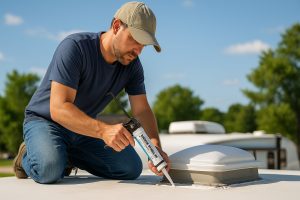 The roof is one of the most expensive parts of your RV—and one of the most neglected.
What to Look For
Climb up (safely) and inspect:
Seams along the roof edges
Around vents, skylights, antennas, and AC units
Around any add-ons such as solar mounts and racks
You’re looking for:
Cracked or peeling sealant
Gaps around fixtures
Soft spots in the roofing material
Even a tiny crack can become a big leak after a few summer storms. Water may sneak into insulation, wiring, or cabinets long before you see stains inside.
What to Do
Clean the area with a compatible roof cleaner.
Scrape away loose or failing sealant.
Reapply a UV-resistant RV roof sealant recommended for your roof type.
Consider a full roof inspection every year or two, especially on older rigs.
A $10–$20 tube of sealant is cheap insurance compared to water damage and electrical problems later.
2. Tire Pressure and Tread Wear – Beat the Summer Heat
 Tires are your only contact with the road, and summer heat is brutal on them.
Why It Matters in Summer
Hot pavement increases the temperature inside your tires.
Under-inflated tires flex more, creating extra heat and stress.
Overloaded or old tires are more likely to blow out at highway speeds.
Your Summer RV Tire Checklist
Check tire pressure when the tires are cool.
Inflate to the pressure recommended on the tire/load chart (not just the sidewall max).
Look for:
Cracks in sidewalls
Uneven wear patterns
Low tread depth
Replace tires that are 5–7 years old, even if they “look fine,” because rubber ages over time.
Use a good tire pressure gauge and consider a TPMS (tire pressure monitoring system) for real-time protection.
Building tire checks into your summer RV maintenance checklist is one of the best safety moves you can make.
3. Air Conditioner Efficiency – Stay Cool Without Overworking Your System
 Nothing kills a camping mood like an RV that won’t cool down in July.
Common AC Oversights
Dirty return-air filters
Dust and debris clogging the condenser coils
Weak airflow from blocked vents
When the AC can’t “breathe,” it runs longer, cools less, and may eventually overheat or fail.
Quick AC Tune-Up
Remove and clean or replace the AC filter (often behind the ceiling shroud).
Gently vacuum coils and fins (or blow out with air) on the roof unit (carefully—they’re delicate). Or use a coil cleaner product such as 3X
Check that interior vents are open and not blocked by furniture or clutter.
Test the AC on a warm day before your first big trip.
A bit of RV air conditioner maintenance now prevents roasting in a sun-baked campground later.
4. Water System Flushing – Clean, Safe Water All Summer
If your RV sat over the winter or between trips, water in tanks and lines can become stale or even unsafe.
Why Flushing Matters
Warm temperatures plus stagnant water are ideal conditions for bacteria and slime. That can lead to:
Bad smells
Clogged strainers and pumps
Potential health issues
Simple Sanitizing Routine
Drain old water from the fresh tank.
Mix 1/4 cup of plain, unscented household bleach per 15 gallons of tank capacity.
Fill the fresh tank with water and run it through all faucets until you smell bleach.
Let it sit 4–8 hours.
Drain and refill with fresh water.
Flush lines until the bleach smell is gone.
While you’re at it, inspect:
Freshwater hose (look for kinks, cracks, bulges)
City water inlet screen
Water pump area for leaks or drips
Add this to your summer RV maintenance checklist at least once a year—or anytime your water smells off.
5. Battery Connections and Charge – Don’t Get Stranded with Dead Power
Summer travel often means more boondocking, more gadgets, and more power use.
Why Heat is Hard on Batteries
High temperatures speed up chemical reactions inside batteries.
Corroded or loose terminals increase resistance and heat.
Deep discharges shorten battery life.
Smart Summer Battery Check
Visually inspect battery terminals for corrosion (white/green crust).
Clean terminals with a battery brush and a baking soda/water mix if needed.
Tighten all cable connections securely.
Use a multimeter:
A fully charged 12-volt battery at rest should read around 12.6–12.8 volts.
Verify your charging source:
Converter/charger output
Solar controller settings
Alternator charge line from tow vehicle or motorhome engine
Good battery care is a cornerstone of preventive RV maintenance, especially if you rely on 12-volt power for lights, fans, and water pumps.
6. Refrigerator Seals and Cooling Vents – Protect Your Food (and Your Trip)
When it’s 95°F outside, your RV fridge is working overtime.
Two Common Summer Fridge Problems
Worn door seals – cold air leaks out, warm air leaks in.
Blocked vents – poor airflow around the cooling unit.
How to Test and Fix
Close a dollar bill in the fridge door and gently tug:
If it slides out easily, the seal may be worn.
Inspect the door gasket for cracks or hardened sections.
Replace the seal if needed (many are DIY-friendly).
Check exterior fridge vents:
Clear out dust, cobwebs, leaves, or nests.
Make sure fans (if equipped) are working.
A properly sealed and ventilated fridge keeps food safe and reduces power or propane usage on hot days.
7. Propane System Leaks – Quiet but Serious
 Your propane system needs to be safe before you start cooking, heating water, or running certain fridges and appliances.
Summer Propane Checks
Smell around appliances and propane compartments. Any “rotten egg” odor is a red flag.
Mix dish soap and water in a spray bottle.
Spray connections, hoses, and fittings while the system is pressurized.
Watch for bubbles:
Small, steady bubbles = leak.
Tighten fittings gently or replace damaged hoses.
Make sure your LP detector inside the RV is working (check date and test button).
Include propane checks in your RV safety checklist every season, especially after winter storage or any work done on the system.
8. Slide-Out Mechanism Lubrication – Avoid a Jammed Campsite Setup
Slide-outs give you extra living space—but only if they move smoothly.
Why Summer is Tough on Slide-Outs
Heat causes metal parts to expand.
Dust, sand, and road grime collect on tracks and gears.
Dried-out seals can crack and stick.
Basic Slide-Out Care
Inspect slide toppers (if equipped) for tears or pooling water. Sunpro MFG SO Fabrics
Wipe down exposed slide rails and gears.
Apply a silicone-based lubricant (PTFE) or one labeled for slide mechanisms (avoid greasy products that attract dirt).
Inspect rubber slide seals for cracks; treat with a rubber conditioner as recommended by the manufacturer.
Add slide-out care to your summer RV maintenance checklist before you end up with a stuck slide and a miserable campsite setup.
Quick Summer RV Maintenance Checklist
Use this high-level list as a pre-trip walk-through:
Inspect and reseal roof seams and fixtures.
Check tire pressure, tread, age, and consider TPMS.
Clean/replace AC filters and check airflow.
Sanitize freshwater system and inspect hoses.
Clean and tighten battery connections; verify charge.
Test fridge seals and clear exterior vents.
Check propane system for leaks and test LP detector.
Lubricate slide mechanisms and inspect seals.
Here’s a ready-to-drop conclusion for the post:
Conclusion for The Smart RVer: Start Summer with Confidence, Not Surprises
Summer RV trips should be about campfires, sunsets, and new places—not emergency repairs on the side of the highway. By working through this summer RV maintenance checklist before you roll out, you’re protecting your rig, your budget, and your peace of mind. Simple tasks like resealing the roof, checking tire pressure, flushing the water system, cleaning AC filters, tightening battery connections, inspecting fridge seals, testing propane lines, and lubricating slide-outs can make the difference between a smooth vacation and a ruined one.
Think of these eight steps as your annual “reset” for the season. A couple of hours in the driveway now can save you hundreds of dollars in roadside calls, park cancellations, and spoiled food later on. Plus, once you know the critical systems on your RV are in good shape, you can relax and actually enjoy the drive.
So before your next adventure, grab a clipboard, print this checklist, and give your RV a quick top-to-bottom check. Your future self—parked at a cool campsite with the AC humming, fridge cold, and everything working—will be glad you did.


