

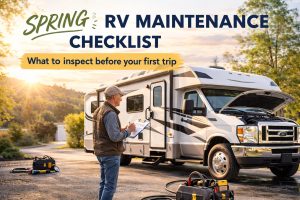
Spring RV Maintenance: This post contains affiliate links. If you make a purchase using a link in this article, we may make a commission.
Article written by Wholesale Warranties, the leading provider of RV Extended Warranties direct to consumers. With a focus on education, customer service, and reliable coverage, Wholesale Warranties has established itself as the premier option for RVers looking to protect the road ahead. To work with a highly trained RV warranty specialist on an RV protection quote for your home-on-wheels, please call 800-939-2806 or visit wholesalewarranties.com.
Why Spring RV Maintenance is Essential
As RVs come out of winter storage and road-trip season approaches, a thorough RV inspection is one of the most important steps owners can take to protect their investment and avoid costly breakdowns during the travel season.
Even properly winterized units experience stress during storage. Temperature fluctuations, inactivity, moisture buildup, and battery discharge can all take a toll. Small issues that often go unnoticed can easily become expensive (and inconvenient) problems once you’re miles away from home.
Following this basic inspection checklist will alert you to issues early, address safety risks, and start your season with confidence.
 Roof and Exterior Seals
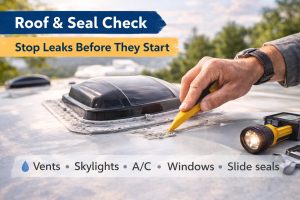
Your first priority each spring should be a careful inspection of the exterior. Water damage can be a major repair issue and a health hazard. Fortunately, it can be prevented through routine inspection and resealing.
Inspect the roof membrane for cracks, soft spots, or visible damage. While on the roof, examine the sealant around vents, skylights, antennas, and A/C units. Then, check window, door, and slide-out seals for brittleness or separation. Over time, seals can dry out, crack, and separate due to exposure. Fortunately, removing and replacing roof sealant is not a complicated process.
Early moisture detection can prevent structural rot, insulation damage, and mold. If you notice any stains, bubbles, or soft spots inside the RV, that needs to be addressed before you plan your next trip. If the signs of water damage are present, further assessment is critical.
 Tires & Suspension Components
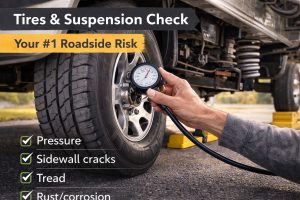
You should inspect your tires before any long road trip, but especially after periods of non-use. Tires often age out before they wear out. During storage, sun exposure, and temperature changes, sidewall cracking and general wear are accelerated.
The RV wheels and suspension system bear a lot of weight. This constant stress strains the suspension system, which is why it’s important to scan the undercarriage for any buckling
Before your first trip:
- Check tire pressure
- Inspect sidewalls for cracking or dry rot
- Determine tread wear
- Visually assess suspension components for rust, corrosion, or damage
Blowouts are among the most common roadside emergencies for RV owners. To reduce travel risks, it’s essential to evaluate tires and other load-bearing components prior to hitting the road.
 Battery
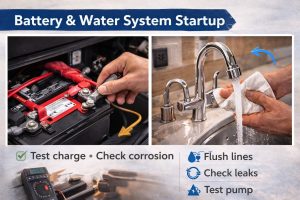
Batteries tend to lose charge passively over time. Even if they’re well-maintained, it’s important to test the charge before a trip. Inspect the terminals for corrosion after long periods of inactivity. Check interior and exterior lighting, outlets, and breakers to ensure uninterrupted connections.
Plumbing & Water Systems
If your RV was winterized, follow proper de-winterization procedures. If there’s antifreeze in your water pipes, you’ll need to flush your water system with freshwater.
After ensuring the water is flowing through your system, you’ll need to drain and refill the water tanks.
Test the water pump for functionality. During this step, take time to inspect pipes for leaks or potential freezing damage.
Appliances & Interior Systems
Always test the functionality of your appliances and other RV systems. Make sure the refrigerator, stovetop, microwave, water heater, slide-out system, and leveling system are in good working order. If you need to troubleshoot appliances, you can check your propane lines before you consider consulting a professional. If an appliance produces an unusual odor, shut it off and seek professional evaluation.
Safety Equipment
Safety devices can degrade during storage, especially if they’re battery-powered.
- Test smoke and carbon monoxide detectors
- Inspect fire extinguishers
- Confirm door and window operation
- Restock aid and roadside emergency kits
The safety inspection is quick, but critical; functional safety gear and procedures protect your RV and the people inside it!
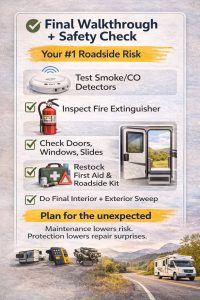 Final Walkthrough
Do a final sweep around the exterior and interior of the RV, including a peek under the hood (do you need to change your oil?) RVs may incur damage during storage due to moisture intrusion, degradation, or rodent activity. If you detect a foul odor, search thoroughly for the source—it could be rodents, forgotten foodstuffs, or both.
When Preventative Maintenance Isn’t Enough
Even the most diligent RV owner can experience unexpected mechanical or system failures. Complex components—such as the engine, slide-out motors, and leveling systems—may fail without warning despite thorough care.
Extended service contracts are designed to help cover the cost of major repairs, especially those that surpass DIY capabilities. Wholesale Warranties offers comprehensive RV extended warranty options that help protect essential systems. Reviewing protection before the travel season will help you understand your coverage options.
Spring RV maintenance reduces risk, and warranty protection reduces financial vulnerability. Together, they create a more predictable, secure ownership experience.
Start the Season with Confidence
A thorough spring inspection sets you up for travel success. By taking time to assess key systems and address minor issues, you extend the lifetime of your RV and reduce the likelihood of unexpected interruptions.
A small investment in driveway prevention can help avoid significant road expenses. With proper preparation and the right RV protection in place, you and your rig will be ready for safe, smooth, and stress-free travels. Spring RV Maintenance!