
Why a Weight Distributing Hitch Matters for RVers
 If you’re towing a travel trailer or toy hauler, a weight distributing hitch (also called a weight distribution hitch) is one of the most important pieces of safety equipment you can buy.
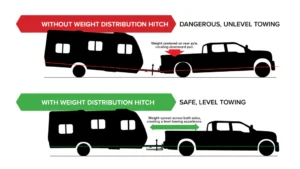
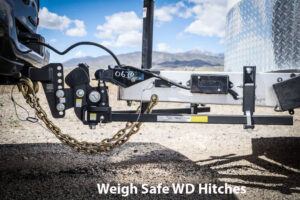
Instead of letting all the tongue weight push down on the back of your tow vehicle, a WDH uses spring bars to spread the load across the front axle of the truck and the axles of the trailer.(Weigh Safe)
That means:
- A level, more stable rig
- Better steering and braking
- Less sway and “squatting”
Most manufacturers recommend or require a weight distribution hitch once you get into heavier trailers or higher tongue weights—often when the trailer is over 5,000 lb or more than about 50% of the tow vehicle’s weight.(Lippert)
What a Weight Distributing Hitch Actually Does
When you drop a heavy trailer on a regular ball mount, the rear of the tow vehicle sags, the front lifts, and the trailer can feel light and unstable. This reduces front-axle traction and braking power and makes steering less precise.(Weigh Safe)
A weight distributing hitch fixes this by:
- Using spring bars under tension to act like big levers
- Pushing down on the trailer frame
- Lifting up on the rear of the tow vehicle
- Shifting part of the tongue weight back to the trailer axles and forward to the tow vehicle’s front axle
The result is a more level combo, improved control, reduced sway, and less stress on the hitch and frame.(Lippert)
Signs You Need a Weight Distributing Hitch
 You should strongly consider a Weight Distributing Hitch if any of these apply:
- Your trailer weight is more than 50% of the tow vehicle’s gross vehicle weight rating (GVWR).
- The rear of the tow vehicle squats when you hook up.
- Steering feels light or vague and braking distances feel longer.
- You notice trailer sway, especially when passed by trucks or in crosswinds.
- Your tow vehicle’s headlights point up and bother oncoming traffic.(Weigh Safe)
Remember: a weight distributing hitch does not increase the tow rating of your vehicle or trailer. You still must stay within the lowest-rated component in the system.(Lippert)
Key Benefits of a Weight Distributing Hitch
1. Safer, More Stable Towing
 By keeping more weight on the tow vehicle’s front axle and leveling the rig, a WDH improves:
- Steering response
- Braking performance
- Overall stability at highway speeds
You’ll feel the difference immediately, especially with longer trailers.
2. Reduced Trailer Sway
Many modern weight distribution hitches also incorporate sway control, either through friction surfaces or advanced pivot-point designs. This helps tame side-to-side motion from wind gusts, passing trucks, and uneven pavement.
3. Less Wear on Your Tow Vehicle
A properly set up hitch shares the tongue weight across all axles instead of overloading the rear springs, shocks, and tires. That can reduce:
- Premature suspension wear
- Uneven tire wear
- Stress on frame and hitch components
4. A More Comfortable Drive
With the rig level and sway reduced, you get:
- Less “porpoising” (up-and-down motion)
- Fewer white-knuckle moments
- A smoother ride for everyone in the truck and trailer
Why Weight Distributing Hitch Maintenance Matters
Once it’s installed, a WDH is easy to forget. That’s a mistake. These hitches contain moving parts, high-tension components, and steel that lives out in the weather. Neglecting weight distributing hitch maintenance can lead to:
- Increased sway and instability
- Noisy, jerky handling
- Broken parts under load
- Unsafe towing conditions
Manufacturers and hitch specialists recommend regular inspections, lubrication, and checks for wear and correct adjustment to keep the system working as designed.
Basic Weight Distributing Hitch Maintenance Checklist
1. Inspect Before Every Trip
Before you pull out:
- Verify snap-up brackets, frame clamps, and bolts are tight.
- Check spring bars for cracks, bends, or excessive rust.
- Make sure the hitch head is securely attached with the correct torque on mounting bolts.
- Confirm safety chains and breakaway cable are routed correctly and not rubbing on moving parts.
A quick visual check can catch obvious issues before they become emergencies.
2. Lubricate Moving Parts
Many systems use friction surfaces for sway control and sockets where the spring bars pivot. Manufacturer recommendations vary, but generally:
- Lightly grease bar ends and hitch head sockets if specified.
- Use dry lube or the recommended compound on friction points when called for.
- Wipe away dirt and old grease that can turn into gritty paste.
Proper lubrication reduces wear and noise and helps the hitch operate smoothly.
3. Check Tension and Setup
Over time, suspension sag, added cargo, or changes to your trailer can affect how your hitch is set:
- Confirm the tow vehicle and trailer sit level when hitched.
- Recheck front and rear fender heights against your original setup numbers.
- Adjust spring bar tension or head angle if your front axle is too light or the rear squats noticeably.
Any major changes in trailer weight or loading deserve a fresh setup check.
4. Monitor Rust and Corrosion
Because WDH components live low and forward on the rig, they see a lot of water, salt, and road grime:
- Clean off caked mud and salt after trips.
- Touch up chipped paint with rust-inhibiting spray.
- Replace hardware that shows significant corrosion, especially pins and clips.
Ignoring corrosion can weaken parts that are under a lot of tension.
5. Replace Worn Parts
If you notice:
- Elongated holes in brackets
- Bent or cracked spring bars
- Rounded or damaged hitch pins
…replace those components before towing again. Your weight distributing hitch is a critical safety system; worn parts aren’t worth the risk.
Conclusion: A Small Investment in Big Peace of Mind
A weight distributing hitch is one of the best upgrades you can make for RV towing safety. It improves stability, reduces sway, and spreads tongue weight across the axles of your tow vehicle and trailer.
But just bolting it on isn’t enough. Regular weight distributing hitch maintenance—inspection, lubrication, adjustment, and replacement of worn parts—keeps it doing its job year after year.
Treat your Weight Distributing Hitch like any other major safety system. A few minutes of care before and after trips can mean thousands of trouble-free miles and fewer surprises on the road.


